Science+ Greater Bay Area Youth
Earth Science Contest 2026
Science + AI — exploring new Earth wisdom. Open to Guangdong primary students (Grades 4–6), fusing AI with Earth Science to guide a new generation of young scientists.
About the 2026 Primary Division
One of the province-wide K–12 contests approved by the Guangdong Department of Education for the 2025–2028 academic terms. 2026 is the launch year, themed "Science+", fusing AI deeply with Earth Science.
Earth Science × AI
From ecology and geology to stars, plants, and birds — paired with AI satellite imagery, AI identification and other real scenarios. Kids experience a dialogue between technology and nature.
Literacy + Innovation
Questions emphasize fundamentals and everyday application; the final round adds cross-disciplinary synthesis and AI-application problems to build independent thinking.
Preliminary + Final
Preliminary uses a transitional dual mode (online CBT + paper-based). Final is an on-site one-day event with subject-advanced exams, an elective, and field study.
Authoritative · Fair · Free
Hosted by the Geological Society of Guangdong. Face-ID for CBT, sealed papers for paper-based exams, full on-site recording at the final, free registration, tiered awards.
Seven Tracks · Choose Freely
The contest has seven tracks, all freely chosen: in the preliminary you pick one of five subject tracks; in the final you pick one of two stream tracks.
Preliminary Tracks · pick 1 of 5
Earth Ecology
Ecosystems, organisms & environment, natural resources, environmental protection, biodiversity.
Geology & Paleontology
Rocks and minerals, soil, Earth's interior, volcanoes & earthquakes, fossils & evolution.
Cosmos & Sky
Solar system, Earth's rotation & revolution, Moon & phases, constellations, space exploration.
Plants & Insects
Six plant organs, photosynthesis, plant reproduction; insect traits, metamorphosis, pollination.
Birds
Common traits of birds, beak shape & diet, migration, common bird ID, conservation.
Final Tracks · pick 1 of 2
Geophysics
Forces & motion (gravity, friction, elasticity, buoyancy); seismic waves & early warning; Earth's magnetic field & compass; energy transformation — with AI data analysis.
Geochemistry
Elements & molecules; rock weathering & chemical change; dissolution & solutions; soil acidity & pH — with AI data analysis.
Register · Test · Advance
2026 is a transition year: each preliminary track is offered in both a computer-based and a paper-based version, chosen by the school. In the final, students pick one of two streams — Geophysics or Geochemistry.
- Preliminary entryOne of five subject tracks
- Final streamGeophysics / Geochemistry — one of two
- FormatCBT or paper-based (chosen by school)
- Preliminary scoreYour chosen track's score
- Advancement~ top 20% advance to the final
Test Spec · CBT & Paper-Based in Parallel
CBT and paper-based papers are identical in content, difficulty, and scoring — only presentation differs. AI virtual scenarios in CBT are mirrored on paper with static images, data tables, or text.
| Item | Details |
|---|---|
| Max score | 100 points |
| Duration | 60 minutes per track |
| Question types | Multiple-choice, true/false, image-ID, data/chart analysis, short-answer |
| Difficulty | Primary level, emphasizing fundamentals and real-life application |
| AI integration | CBT embeds AI virtual scenarios (satellite comparison, AI rock ID, AI bird ID, etc.); paper-based mirrors them with static images, data tables, or text |
Preliminary Timeline
Online Registration
Sign up on the official site: pick one of the five subject tracks and a test format (CBT or paper). Admission ticket generated upon submission.
Mock Tests Open
Independent mocks per track to familiarize students with the question types, CBT interface, and to verify equipment.
Official Preliminary
Each track runs in its registered format (CBT or paper-based).
Results & Qualifier List
Ranked by preliminary score with consideration for per-track entry ratios, the qualifier list for the final is published.
Subject Advance + Elective · Two Rounds
The final follows a "Subject-advanced (mandatory) + Elective (Geophysics or Geochemistry)" model, with deeper AI integration and elevated difficulty — held over one full day on-site.
| Round | Name | Content | Score | Weight |
|---|---|---|---|---|
| Round 1 | Subject-Advanced (mandatory) | In-depth exam on the preliminary track you qualified in (includes AI application) | 100 pts | 50% |
| Round 2 | Elective | One of two: Geophysics or Geochemistry — fundamentals plus AI application | 100 pts | 50% |
| Final Total | 200 pts | 100% | ||
Subject-Advanced (per track)
- FormatClosed-book paper test (answer sheet)
- Duration60 minutes
- Questions10 advanced MCQ · 2 synthesis · 1 cross-topic · 1 AI + subject application
- DifficultySignificantly higher than preliminary — depth and cross-disciplinary
Elective (Geophysics / Geochemistry)
- FormatCBT with virtual lab and AI scenario interaction
- Duration60 minutes
- Questions10 basic MCQ · 2 scenario · 1 AI data analysis · 1 practical
- DifficultyFoundational — manageable after pre-final training
Elective Streams
| Stream | Main content | AI integration |
|---|---|---|
| Geophysics | Forces & motion (gravity, friction, elasticity, buoyancy); seismic waves & early warning; Earth's magnetic field & compass; energy forms & transformation | AI seismic-warning data analysis · AI magnetometer simulation |
| Geochemistry | Elements & molecules (basics); rock weathering & chemical change; dissolution & solutions; soil acidity & pH | AI water-quality data analysis · AI mineral composition ID |
One Full Day, End-to-End
Exams · public lecture · field study · awards & closing — a complete one-day experience.
| Time | Block | Content | Notes |
|---|---|---|---|
| 08:00 — 08:30 | Check-in | ID verification, confirm main track & elective | — |
| 08:30 — 09:30 | Round 1 | Subject-Advanced (rooms by track) | Paper |
| 09:30 — 09:45 | Break / Move | Students switch rooms | — |
| 09:45 — 10:45 | Round 2 | Elective (Geophysics or Geochemistry) | CBT |
| 10:45 — 11:00 | Break | — | — |
| 11:00 — 12:00 | Public Lecture | "How AI helps scientists study the Earth" | Not scored |
| 12:00 — 13:30 | Lunch | Provided | — |
| 13:30 — 16:30 | Field Study | Geology park / natural museum / nature reserve — complete the field handbook | Outdoor |
| 16:30 — 17:30 | Closing & Awards | Results announced, certificates and medals presented | — |
Free Online Training · 6 Modules
The committee offers free online training in the two weeks before the final. All sessions are recorded for replay.
Module 1 · AI Overview
AI applications in Earth Science · Live · 1.5 hrs
Module 2 · Five-Track Sprint
Five small-group live classes · 2 hrs each
Module 3 · Geophysics Intro
Forces, earthquakes, magnetism, energy · Recorded + exercises · 2 hrs
Module 4 · Geochemistry Intro
Elements, weathering, pH, water · Recorded + exercises · 2 hrs
Module 5 · AI Data Practicum
Case-based teaching · Live · 1.5 hrs
Module 6 · Mock & Q&A
Online self-test + live Q&A · 1 hr
Tiered Awards · Multiple Honors
Preliminary awards 1st / 2nd / 3rd per track (digital certificates); every finisher receives an "Earth Junior Explorer" certificate. Final awards are below.
First Prize
Medal + "Junior Doctor of Earth Science" certificate + prize
Second Prize
Certificate + prize
Third Prize
Certificate
Merit Award
All other finishers — certificate
AI Innovation Award
Top 3 scores on the AI Data Analysis question in Round 2
Earth Science Star
Top scorer in Round 1 from each track
Outstanding Mentor
Mentors of First Prize winners
Outstanding Organizer
Schools with exceptional contest organization
Eight Years of Earth-Science Education
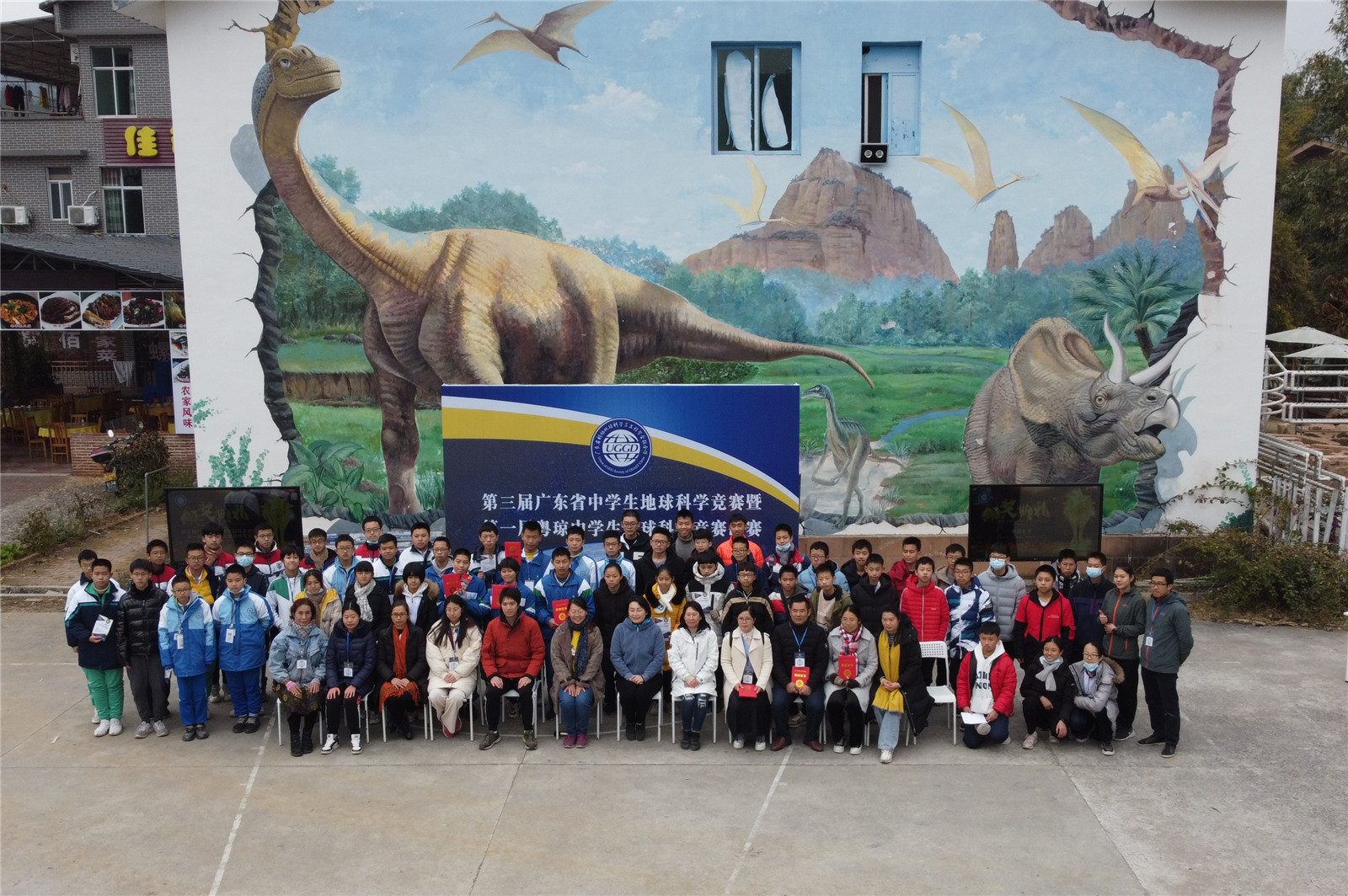
The 2026 Primary Division doesn't start from scratch — it inherits a contest held for seven consecutive editions since 2018: from Guangdong to Guangdong–Hainan, from middle school to primary, from a provincial event to a Greater Bay Area & National Invitational.
Hosted by the Guangdong Earth Science & Engineering Societies Alliance
Gallery · Real moments of discovery
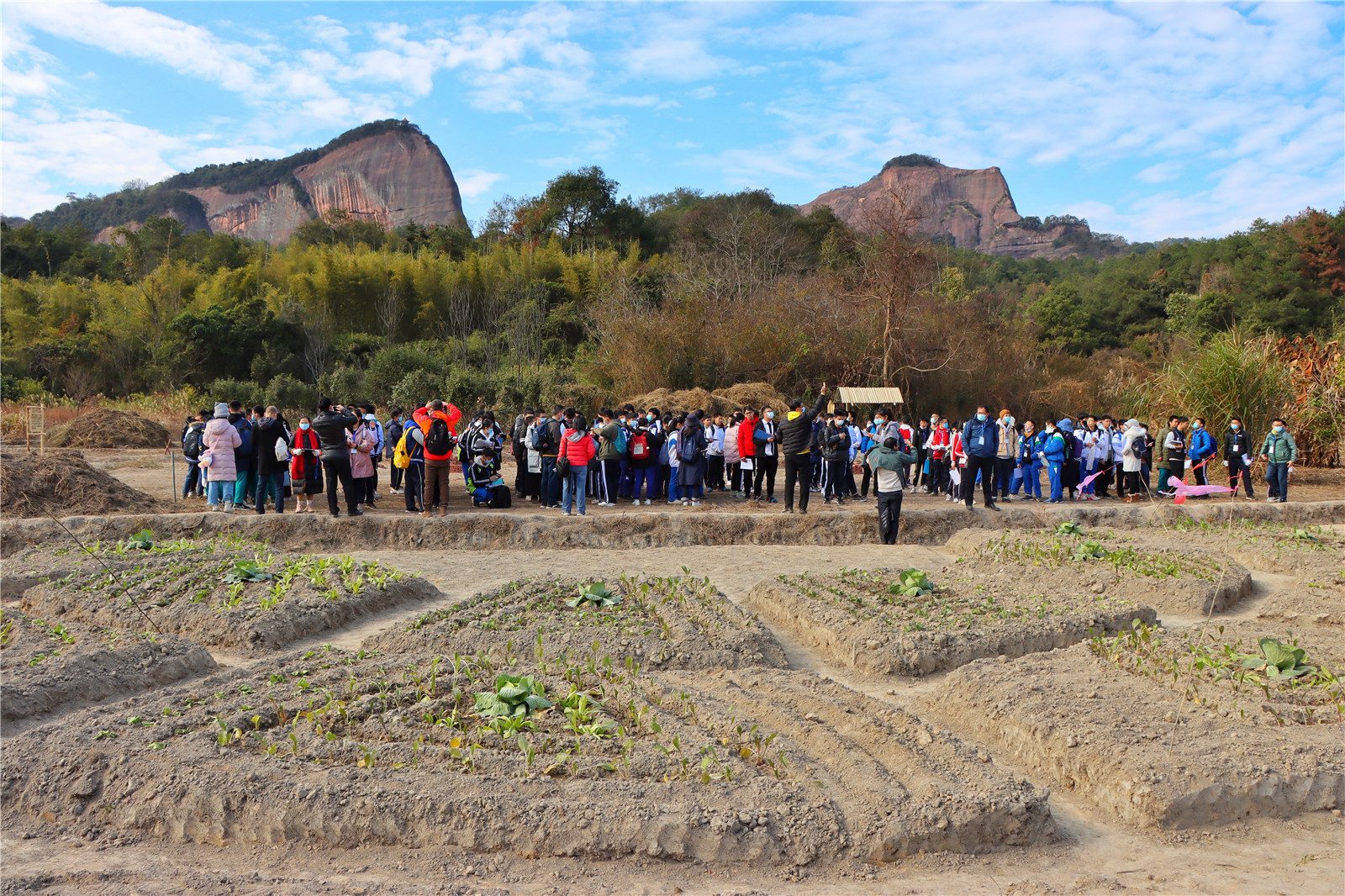
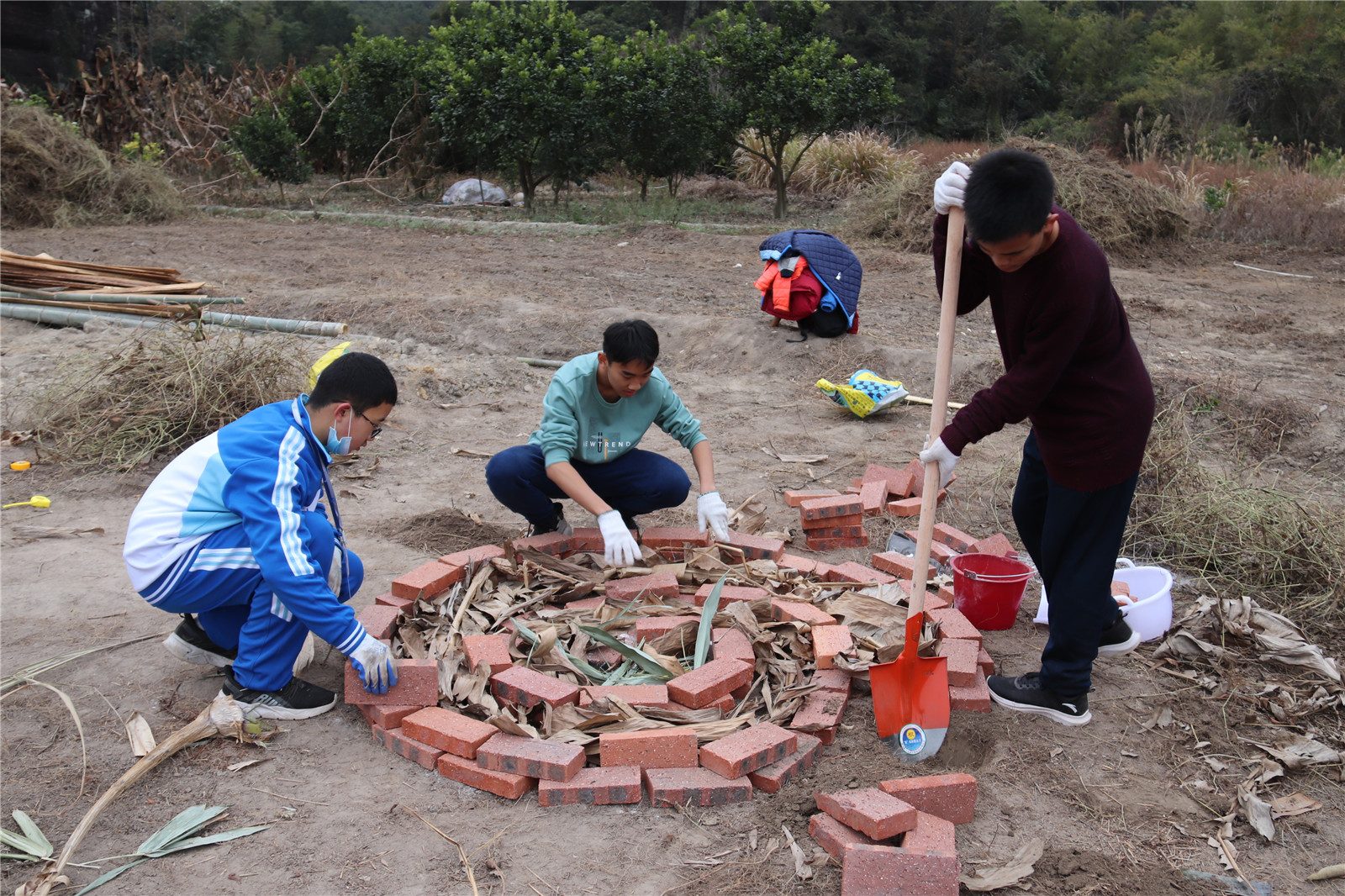
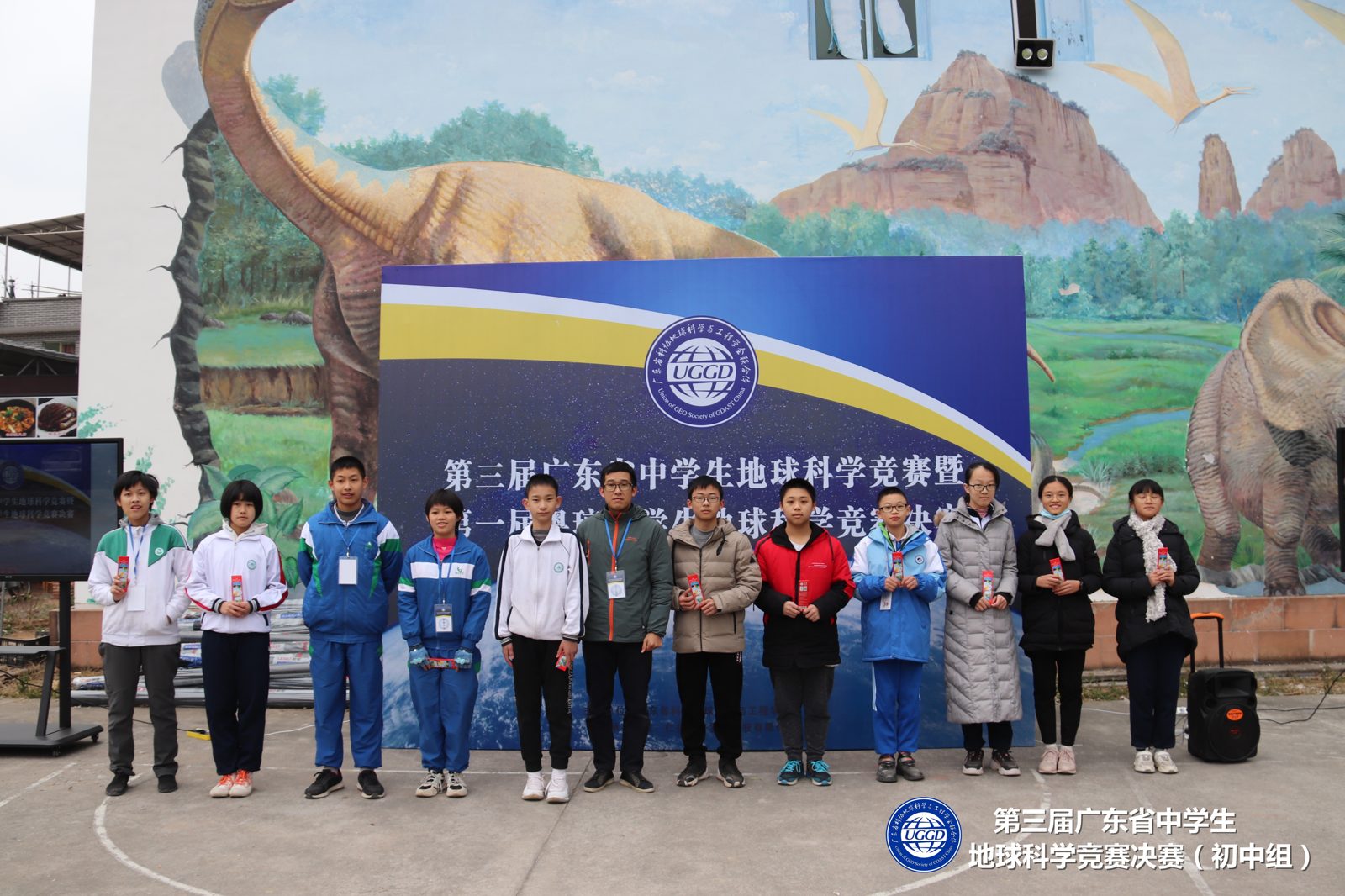
Fieldwork, hands-on practice, friendly competition and award moments — authentic records from past Earth Science contests (Danxiashan finals).
How to Enter · Fees · Tech Assurance
How to Register
- Open the online registration form and enter student & guardian details.
- Pick one of the five subject tracks and its test format (CBT or paper).
- Submit — the system generates your registration number. Keep it safe.
Fees
- RegistrationFree (Guangdong whitelist contest)
- Final lodgingHotel arranged centrally; covered by student (subsidies for students in financial need)
Fairness & Anti-cheating
- Dual-mode parityCBT and paper papers — identical content, difficulty, scoring
- CBT measuresFace-ID · tab-switch logging · IP lock · randomized questions
- Paper measuresSealed papers · standardized answer sheets · AI + human grading
- Final venueFull recording · judges score on the spot
- Tech assuranceCBT platform supports 10k concurrent users · standby servers · online support
Ready to explore Earth?
Review the track outlines and confirm test-format preferences with your school before registering.